
Artificial intelligence has quickly moved from buzzword to business tool and manufacturers across the Quad Cities are starting to ask a very practical question:
How do we use AI in a way that actually supports our operations?
We’ve had these conversations with organizations of all sizes – from multi-site regional manufacturers to long-standing family-owned plants and the concerns are pretty uniform across the board. Leaders don’t want sweeping transformation. They want clarity, stability, and tools that genuinely make their teams more effective.
The great news is that AI can deliver meaningful improvements without disrupting the core of your business.
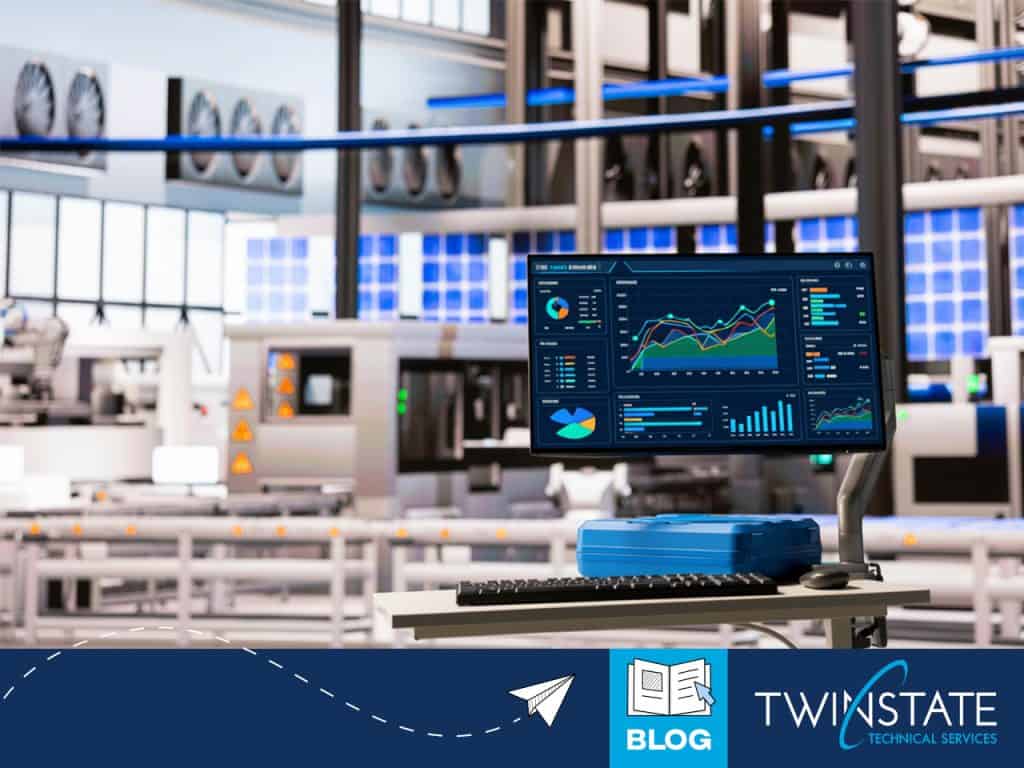
AI Isn’t About Reinventing Your Factory Floor
Many manufacturers assume AI requires robotics, specialized hardware, large data lakes, or major capital investments. In reality, the most beneficial implementations often begin with small, targeted use cases that support the work your teams already do.
Some of the most successful early steps our local manufacturing clients take include:
1. Smoother Onboarding & Knowledge Sharing
AI can transform SOPs, work instructions, and shift notes into clearer, more accessible training resources, helping new employees get up to speed faster and with fewer interruptions for supervisors.
2. Better Visibility into Equipment Health
By combining maintenance logs, sensor readings, and operator notes, AI can highlight early warning signs and reduce unplanned downtime.
3. Earlier Detection of Quality Variations
Patterns that would normally take weeks to spot can surface in real time, helping teams maintain consistency without adding new checkpoints.
4. More Accurate Planning & Scheduling
AI-supported forecasting can strengthen labor allocation, inventory planning, and production schedules—especially in plants balancing multiple product lines or fluctuating demand.
5. Less Repetitive Work for Office Teams
Back-office functions such as purchasing, safety documentation, reporting, and customer communication can be streamlined, allowing staff to spend more time on strategic work.
These are realistic, accessible starting points, no major disruptions, no new systems replacing your core platforms, and no expectations of massive data science teams.
When we meet with local organizations, most share a similar hesitation:
“We don’t know where to start and we can’t afford to get this wrong.”
Being cautious is smart! AI touches data, operations, workflows, and security. Getting started in AI requires:
- Strong data hygiene
- Clear use cases
- Secure governance and controls
- Integration with existing systems
- A sensible roadmap that matches your pace
But don’t feel overwhelmed! Because of this, Twin State Technical Services created our AI Working Sessions – a collaborative environment where manufacturing leaders can explore AI safely, ask candid questions, and see real-world use cases from peers across the region. These aren’t lectures or product demos; they’re hands-on, practical working sessions designed to bring you clarity and a roadmap for execution.
How TSTS Helps Manufacturers Approach AI with Confidence
We don’t come in with a one-size-fits-all platform. Instead, we bring the full depth of our engineering, cybersecurity, cloud, development, and data teams – people who understand real plant-floor conditions and what it takes to keep operations running.
Our approach is grounded in:
- Security first – every AI workflow must meet your compliance and risk standards
- Operational alignment – technology should fit your processes, not the other way around
- Team readiness – AI must support your workforce, not overwhelm it
- Long-term sustainability – early wins should lay the groundwork for future growth
We’ve supported Midwest organizations like yours for over 30 years, and we’re proud to help local manufacturers navigate this next stage of modernization with the same level of care, clarity, and technical rigor that define our broader IT practice.
You Don’t Need a Big AI Project. You Just Need a Starting Point.
If you’re a manufacturing leader exploring AI – or simply trying to understand where it fits- our team is here to help.
A Discovery Call with TSTS is a simple, low-pressure way to get clarity on:
- What problems AI can help solve
- What it absolutely shouldn’t touch
- What “phase one” looks like for your business
- How to move forward safely and sustainably
There’s no jargon, no assumptions, and no sales pressure – just a clear, helpful conversation tailored to your organization.
Book your AI Discovery Call today!
Frequently Asked Questions About AI in Manufacturing
AI in manufacturing refers to the use of software models that analyze operational data—such as production records, maintenance logs, quality results, and planning data—to identify patterns, predict outcomes, and support better decision‑making. Most manufacturers use AI to enhance existing processes rather than replace them, improving visibility, consistency, and efficiency without rebuilding the factory floor or adding new hardware.
Today, manufacturers commonly use AI for predictive maintenance, quality monitoring, production planning, workforce training, and administrative efficiency. AI helps surface early warning signs of equipment issues, identify quality trends sooner, improve scheduling accuracy, and make SOPs easier to access. These applications typically work alongside existing ERP, MES, and maintenance systems rather than replacing them.
AI helps manufacturing teams reduce manual analysis and decision fatigue by identifying patterns that are difficult to detect manually. It can highlight process variation, recurring quality risks, and performance trends earlier, allowing teams to address issues proactively. This leads to more consistent output, reduced downtime, and better use of skilled labor without adding inspections or administrative burden.
Manufacturers can get started with AI by focusing on one or two practical, low‑risk use cases tied to real operational challenges. Common starting points include improving access to SOPs and institutional knowledge, analyzing maintenance history, or streamlining reporting. Successful early efforts prioritize clear goals, data readiness, and governance—rather than large budgets or disruptive system changes.
Manufacturers in the Quad Cities can work with regional technology partners that understand Midwest production environments, data security requirements, and workforce realities. Organizations like Twin State Technical Services help local manufacturers explore and implement AI through hands‑on working sessions, phased adoption planning, and secure integration with existing systems. Working with a local partner allows manufacturers to move forward confidently, using AI in ways that support real operations without disrupting production or over‑investing early.


